When we are young, movement is often how we explore the world. We run, swing, wrestle, dance and play. Some of us love building things, others discover the satisfaction of building strength. We swim, surf, skate and learn what it means to be part of a team.
For many people, movement sits at the centre of their favourite childhood memories. It gives us adventure, connection and a growing sense of what our bodies can do.
As adults, we start calling some of that movement “exercise”. For some, the word is motivating. For others, it becomes a dividing line: “I’m just not someone who exercises.”
Yet there are many ways to be active. If pain, fear or lost confidence has made your world smaller, finding a manageable way back to movement can be an important part of recovery.
Movement helps us understand and strengthen our bodies
Every time we move, the nervous system receives information from receptors in our muscles, tendons, joints and skin. Together with vision and the balance system, this information helps us judge where we are, how much force to use and how to stay steady against gravity.
This sense of body position and movement is called proprioception. It contributes to the brain’s internal representation of the body, often called the body schema. Catching a ball, stepping onto uneven ground or reaching overhead all draw on these processes.[1]
Physical activity also helps maintain strength, cardiovascular fitness and bone health. Different activities provide different challenges. Walking builds endurance, resistance training develops strength, and balance or skill practice challenges coordination. The benefits depend on what we do, how much we do and how we recover.[2]
Movement also interacts with chemical signalling systems involved in mood, motivation, stress and pain:
- Endocannabinoids, including anandamide, can increase during aerobic exercise and may contribute to the sense of wellbeing some people experience afterwards.[3]
- Endorphins are part of the body’s own opioid system and can contribute to pain modulation. However, they do not fully explain the “runner’s high”.[3,7]
- Serotonin, dopamine and noradrenaline are involved in mood, reward and alertness. Exercise can influence these systems, although the mechanisms in humans are still being investigated.[4]
Exercise can also increase circulating brain-derived neurotrophic factor, or BDNF, a protein involved in the survival and adaptability of nerve cells. This is one possible contributor to the relationship between physical activity and brain health. [5]
These responses help explain why movement can feel rewarding and support health. The experience varies between people, and you do not have to feel a rush of energy after every session to benefit.
How movement gradually disappears
Adult life can leave fewer opportunities for varied movement. Work, driving, scrolling, caring responsibilities and fatigue compete for our time. Previous injuries or recurring symptoms can make activity harder to maintain.
Over time, doing less can reduce our physical capacity. A walk feels harder. Getting up from the floor takes more effort. A sport we once enjoyed begins to feel unfamiliar. Ageing can bring additional changes in strength and balance, but meaningful improvements remain possible later in life.[1,2]
Our bodies are adaptable, and there are many opportunities to support strength, comfort and confidence in movement. Understanding your symptoms, daily habits and current abilities helps us find a starting point that works for you. From there, small, manageable changes can help you gradually build your capacity for the activities you enjoy.
When pain creates fear of movement
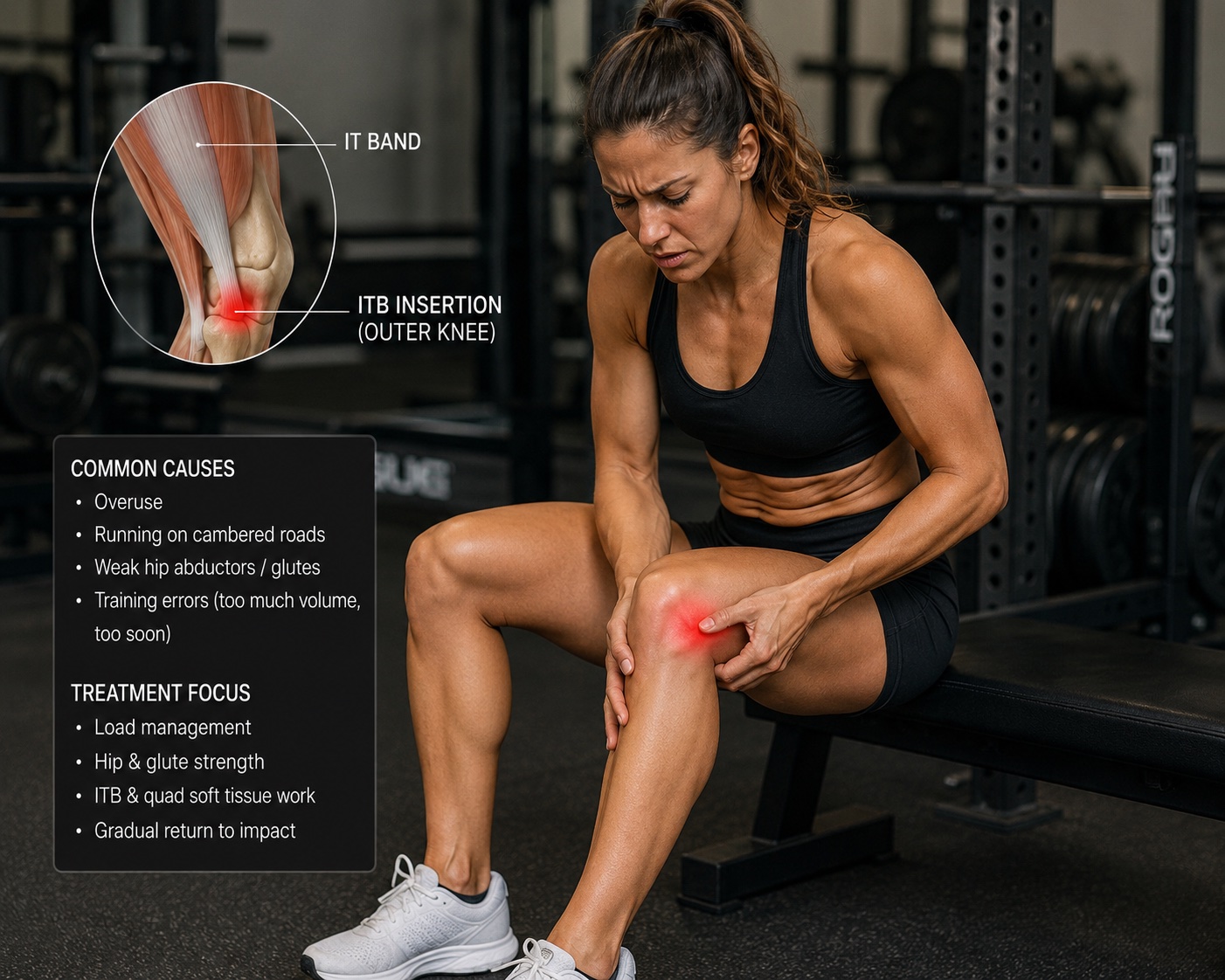
Pain naturally attracts our attention. After an injury, protecting the affected area and temporarily modifying activity may be sensible. Difficulty can arise when fear and avoidance continue beyond what the condition requires.
You stop bending because your back might hurt. You give up walking because your knee might flare. Eventually, even an ordinary task can feel threatening. Fewer activities feel manageable, and confidence starts to fall.
Researchers describe one possible pattern as the fear-avoidance cycle. Pain can lead to fear, fear can lead to less activity, and prolonged avoidance may contribute to disability and loss of confidence.[6]
This pattern does not describe everyone with persistent pain. Pain is real, and struggling to move is not a personal failure. A useful assessment considers the condition alongside factors such as sleep, stress, work demands and previous experiences.[9]
Advice to “be careful” is often incomplete. People also need to understand what they can do, what needs temporary modification and how they can progress.
Movement can be part of pain management
Movement can influence how the nervous system processes pain. Researchers use the term exercise-induced hypoalgesia to describe a reduction in pain sensitivity during or after exercise.
This response is well documented in people without persistent pain, but it is less predictable in people with chronic pain. Some feel better after activity; others notice little immediate change or experience a flare.[7]
The starting point therefore matters. The type of activity, its intensity and the amount of recovery should suit the person and the condition. A manageable walk, supported strength exercise or gentle movement practice may be an appropriate first step.
You do not always need to be completely pain free before beginning rehabilitation. Equally, increasing pain is not something to ignore. The aim is to find a tolerable starting point, monitor the response and build gradually, with guidance when needed.[7,9]
Pain relief, medication and temporary rest can have useful roles. They may help someone sleep, manage an acute episode or participate in rehabilitation. For ongoing musculoskeletal pain, a plan should also consider how to maintain or rebuild function.[8]
What a useful recovery plan should provide
When pain has disrupted your life, “do more exercise” may be too vague to help. A useful plan should provide:
- Understanding of your symptoms, a working diagnosis where possible, and recognition of anything that needs medical investigation or referral.
- Clear advice about activities you can continue, adjustments that may help and any temporary restrictions that are necessary.
- Practical instructions about where to start, how often to practise, how much to do and how to respond to a flare.
- Appropriate treatment and review, with progress measured against activities that matter to you.[9]
Early goals can be modest: walking to the shops, carrying groceries, getting out of a chair more easily or spending time in the garden. They give rehabilitation a purpose that is personal and useful.
How our team can support your return to movement
Chiropractic care can include joint mobilisation or manipulation, soft tissue treatment, education and exercise rehabilitation. For some musculoskeletal conditions, these approaches may help manage pain and improve function as part of a broader plan.
For example, the World Health Organization’s guideline for chronic primary low back pain includes education, structured exercise and selected physical therapies, including spinal manipulation, as options within individualised care. Benefits and suitability vary, and no single treatment is appropriate for everyone.[8]
Hands-on treatment may help make movement more comfortable. Rehabilitation then provides opportunities to practise useful movements and gradually develop capacity. The aim is to help you become more confident managing your activities over time.
Foot and ankle care can help remove barriers to movement
Problems below the knee can create similar barriers to staying active. Ankle instability, heel pain and conditions affecting how the feet move and bear weight can make walking uncomfortable or less secure. Even a small, painful corn can change how you walk and discourage activity.[10,12]
Our podiatrists assess and manage these foot and ankle concerns. Depending on the diagnosis, care may include footwear advice, pressure relief, exercises, skin care or other targeted treatment.[10,11]
Working together to support movement
When several areas are involved, our chiropractors and podiatrists may work together. We can consider foot and ankle function alongside lower-limb strength, balance and the movement and coordination of the hips, pelvis and spine. Sharing findings helps us coordinate advice and rehabilitation around the activities you want to return to.[12]
When massage therapy can help
Where muscle tension or soft tissue discomfort is making movement harder, remedial massage may be a useful addition. Massage can support relaxation and may provide relief for some musculoskeletal pain. Used alongside appropriate movement and rehabilitation, it can be part of a plan to help you move more comfortably.[8,13]
Our approach at Spine Sport Feet
At Spine Sport Feet, we start by understanding where you are now and what you would like to get back to doing. We assess your symptoms and function, discuss the likely diagnosis and explain when further investigation or another health practitioner’s advice is needed.
Depending on the condition and your preferences, care may include chiropractic treatment, podiatry, remedial massage, exercise rehabilitation or taping. High-intensity laser therapy or shockwave therapy may also be discussed where appropriate for the specific diagnosis. Each option has its own evidence and limitations, and treatment should have a clear purpose within your recovery plan.
We place a strong emphasis on helping you understand what you can do. That includes finding manageable movement options, adjusting loads and building towards the activities that give your life enjoyment and meaning.
We cannot promise to resolve every condition. We can work with you to establish realistic goals, review your progress and adapt the plan when needed.
If pain has made you uncertain about movement, an assessment can help clarify your starting point. Whether your goal is surfing again, returning to a team or simply moving through the day more comfortably, we would be pleased to help you explore the next step.
For more information or to make an appointment, please call us on (07) 5580 5655 or visit https://spinesportfeet.com.au/booking/.
_______________________________________________________________________________________________
References
1. Proske U, Gandevia SC. The proprioceptive senses: their roles in signaling body shape, body position and movement, and muscle force. Physiological Reviews. 2012;92(4):1651–1697. Read source
2. World Health Organization. Physical activity. Fact sheet. 26 June 2024. Read source
3. Siebers M, Biedermann SV, Bindila L, Lutz B, Fuss J. Exercise-induced euphoria and anxiolysis do not depend on endogenous opioids in humans. Psychoneuroendocrinology. 2021;126:105173. Read source
4. Montgomery TR Jr, Grant DM. Neurobiological, molecular, and systemic mechanisms of exercise in the treatment of mental health disorders. Journal of Psychiatric Research. 2026;195:113–122. Read source
5. Szuhany KL, Bugatti M, Otto MW. A meta-analytic review of the effects of exercise on brain-derived neurotrophic factor. Journal of Psychiatric Research. 2015;60:56–64. Read source
6. Vlaeyen JWS, Linton SJ. Fear-avoidance model of chronic musculoskeletal pain: 12 years on. Pain. 2012;153(6):1144–1147. Read source
7. Rice D, Nijs J, Kosek E, et al. Exercise-Induced Hypoalgesia in Pain-Free and Chronic Pain Populations: State of the Art and Future Directions. The Journal of Pain. 2019;20(11):1249–1266. Read source
8. World Health Organization. WHO guideline for non-surgical management of chronic primary low back pain in adults in primary and community care settings. Geneva: WHO; 2023. Read source
9. Australian Commission on Safety and Quality in Health Care. Low Back Pain Clinical Care Standard. Sydney: ACSQHC; 2022. Read source
10. Healthdirect Australia. Foot care. Read source
11. Queensland Health. Wounds of uncertain cause or non-healing ulcers. Clinical Prioritisation Criteria. Updated 28 January 2025. Read source
12. Martin RL, Davenport TE, Fraser JJ, et al. Ankle Stability and Movement Coordination Impairments: Lateral Ankle Ligament Sprains Revision 2021. Journal of Orthopaedic and Sports Physical Therapy. 2021;51(4):CPG1–CPG80. Read source
13. National Institute for Health and Care Excellence. Low back pain and sciatica in over 16s: assessment and management. NICE guideline NG59. Recommendation 1.2.7 on manual therapies. Read source